
People
Staff

Mark Fisher serves as the Founding Director for AIDC. Mark’s research focuses on the history and future of democratic thought, with a particular emphasis on early attempts to understand and theorize Athenian democracy. Prior to coming to Georgetown, Mark earned his Ph.D. in Political Science from the University of California at Berkeley and held visiting research fellowships at the University of Oxford and the Freie Universität, Berlin.

John Severini serves as the Graduate Director for AIDC. John is a current Ph.D. student at Georgetown University’s department of Government. His research primarily focuses on the role technology plays in war and the impact it has on partnerships between the state and the private sector. John earned an M.P.A. in International Security Policy from Columbia University in 2021. He has previously worked for Columbia’s Saltzman Institute of War and Peace Studies as well as for the Center for Strategic and International Studies.

Matthew David Hamilton is an Affiliated Fellow for AIDC, an Assistant Professor of Political Science at George Washington University (GWU) and the Director of GWU’s Politics & Values program. Matthew’s research combines normative Political Theory; work in the history of ideas and of IR; and International Relations Theory to analyze world politics and rethink theories of global justice.

Ludovico Picciotto serves as the Graduate Research Associate. Ludovico’s Ph.D. research at Georgetown University focuses on “making money” as a privileged site for state-building in sixteenth-century Europe. He holds a Dual MA/MSc in International History from Columbia University and the London School of Economics, and a MA in International Relations from the University of Trieste.
Fellows
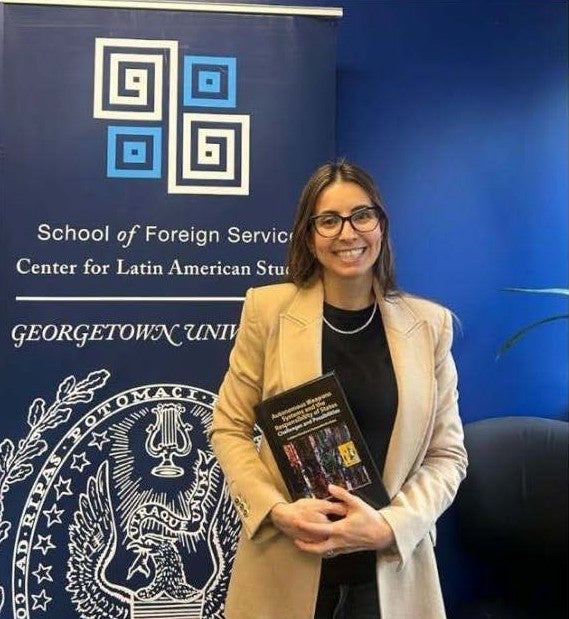
Lutiana Valadares Fernandes Barbosa is an Adjunct Professor and Visiting Researcher at Georgetown University SFS-CLAS. She is also a Postdoctoral Researcher at the O’Neill Institute at Georgetown University Law Center, and a Federal Public Defender in Brazil since 2010. She holds a Ph.D. in International Law from the Federal University of Minas Gerais (UFMG) and an LL.M. from Columbia University. Her scholarship focuses on the ethics and governance of artificial intelligence, with particular emphasis on its impact on human rights, international humanitarian law, democracy, and gender equality. She is the author of books and publications on these issues and is currently writing a book on Artificial Intelligence, Women, Peace, and Security.

Kristen Collins is a political theorist and Senior Fellow at the F.A. Hayek Program for Advanced Study in Philosophy, Politics, and Economics at the Mercatus Center at George Mason University. Her research interests include the history of political thought, contemporary democratic theory, socioeconomic inequality, and digital political economy. Her work has been published in academic journals such as American Journal of Political Science and Political Theory. Her first book, Spectatorship and Surveillance in Liberal Democracies: Seeing and Being Seen, under contract with Oxford University Press, draws on Enlightenment era thought to criticize the impact of public and private forms of surveillance on democracy today. She also hosts Virtual Sentiments, a podcast on the ethics and politics of digital technology from a historical perspective.

Steven Kelts is a corporate AI Ethicist. After two decades as a college professor teaching and researching technology ethics and policy, he now works on an AI Governance team in healthcare. His academic career spanned George Washington, Northwestern and Princeton. He has published scholarly work in a wide range of venues, including IEEE Technology & Society, Teaching Philosophy, NOMOS: The American Society for Political and Legal Philosophy, and the Oxford University History of Political Thought Series. He holds an A.B. from Harvard College and a Ph.D. from Stanford University.

Philipp Kremers is a Postdoctoral Fellow at the AIDC Initiative. He received his PhD in Philosophy from Georgetown University in 2026. His research combines political philosophy and social epistemology and examines how technology can contribute to the realization of freedom. More specifically, he is interested in the epistemic and political conditions under which technological systems enable or constrain collective self-organization. His research has appeared in academic journals such as Synthese and Inquiry as well as in public-facing outlets such as Jacobin and Jungle World. Prior to Georgetown, he studied philosophy in Oxford, St Andrews, Vienna, and Leipzig.
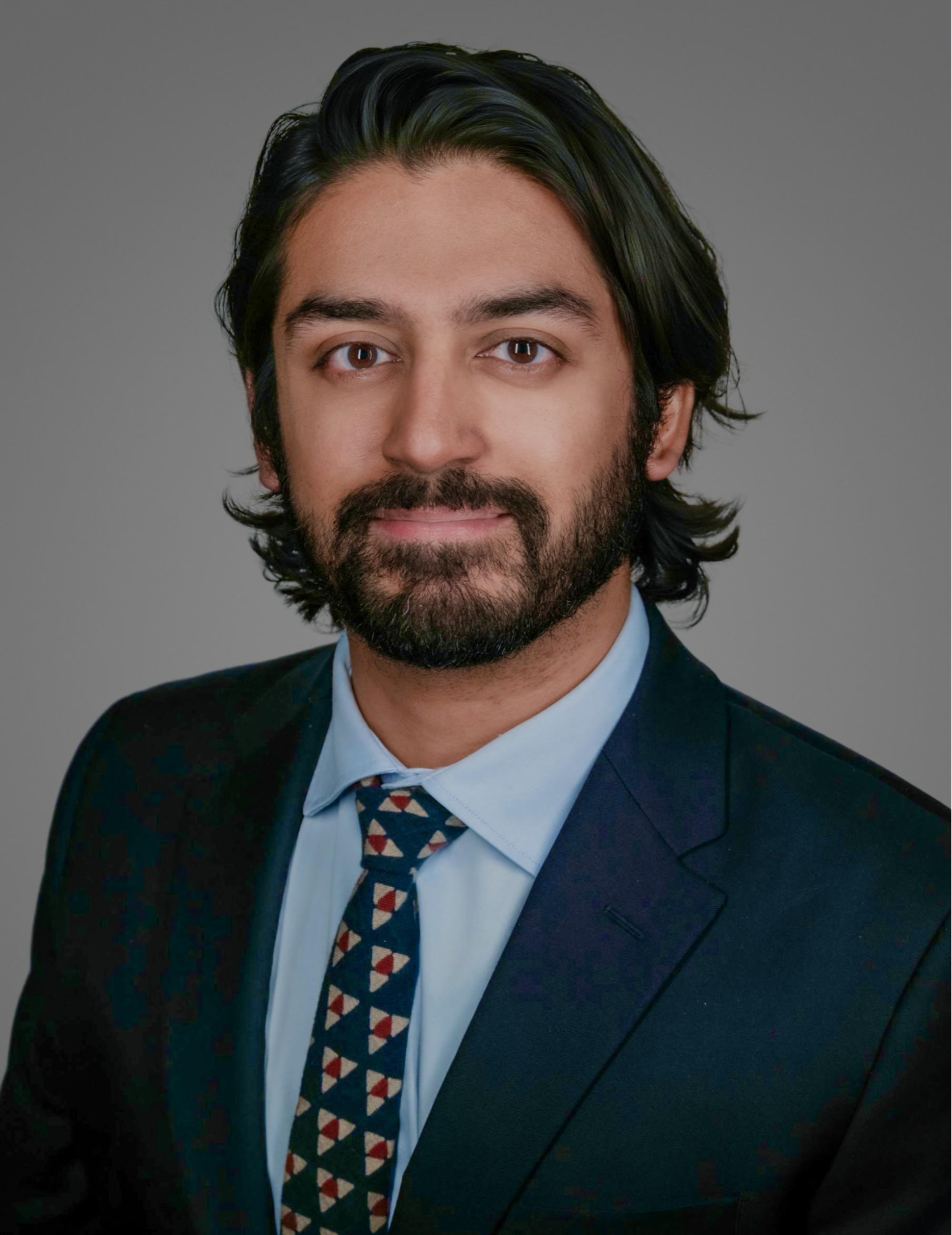
Sadev Parikh is a Visiting Associate Professor and the Privacy and Technology Law Fellow at the George Washington University Law School. His research examines how dominant technology firms acquire definitional power over contested concepts such as “privacy,” and how the law can open entrenched positions to democratic challenge, in defense of freedom of thought and conscience. Sadev previously served as a Trial Attorney in the Antitrust Division of the U.S. Department of Justice, where he litigated cases including United States v. Google (Ad Tech) and United States v. Apple. He holds a J.D. from Georgetown Law, an M.P.A. from the Harvard Kennedy School, and an A.B. magna cum laude from Cornell University, where he studied philosophy and government as a College Scholar, with further study of philosophy at the University of Cambridge.
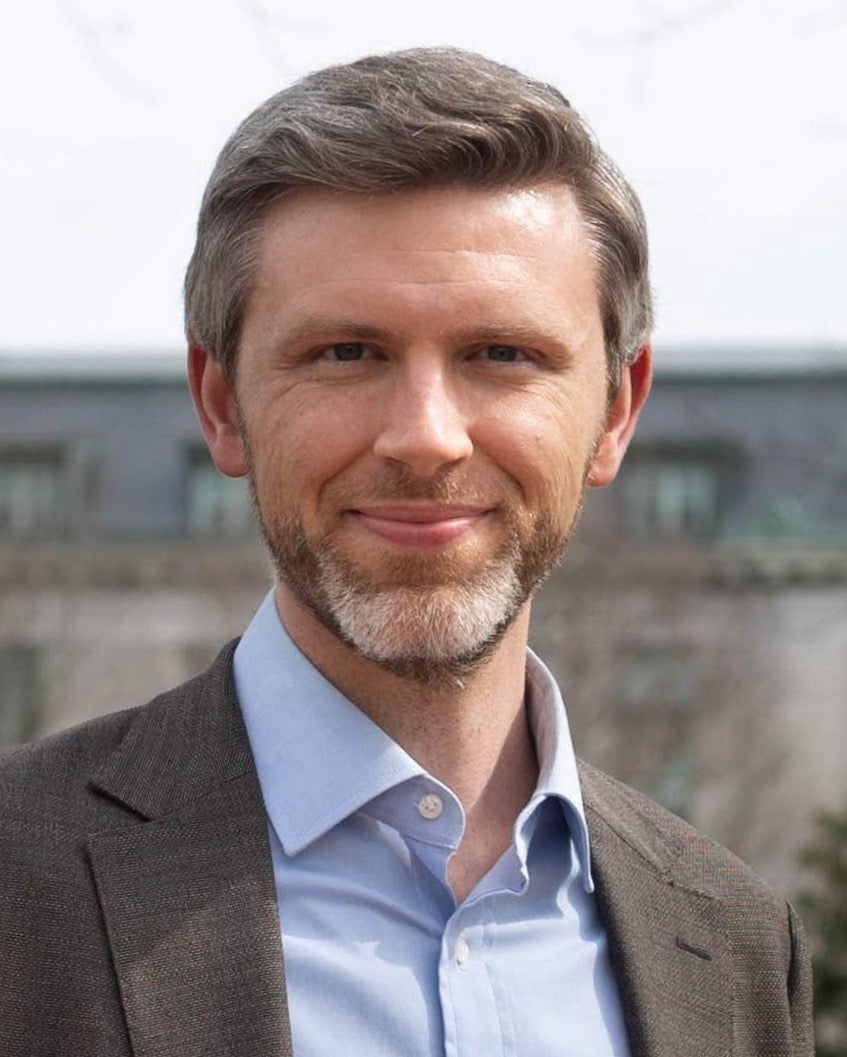
Nathan Pippenger is associate professor of political science at the US Naval Academy and the author of A Common Country: Solidarity and the Making of American Democracy (Oxford University Press). He is a political theorist with broad research interests in democracy, citizenship, and the politics of peoplehood, especially in the context of the United States. His research has appeared in The American Journal of Political Science, The Journal of Politics, Perspectives on Politics, and numerous other journals.
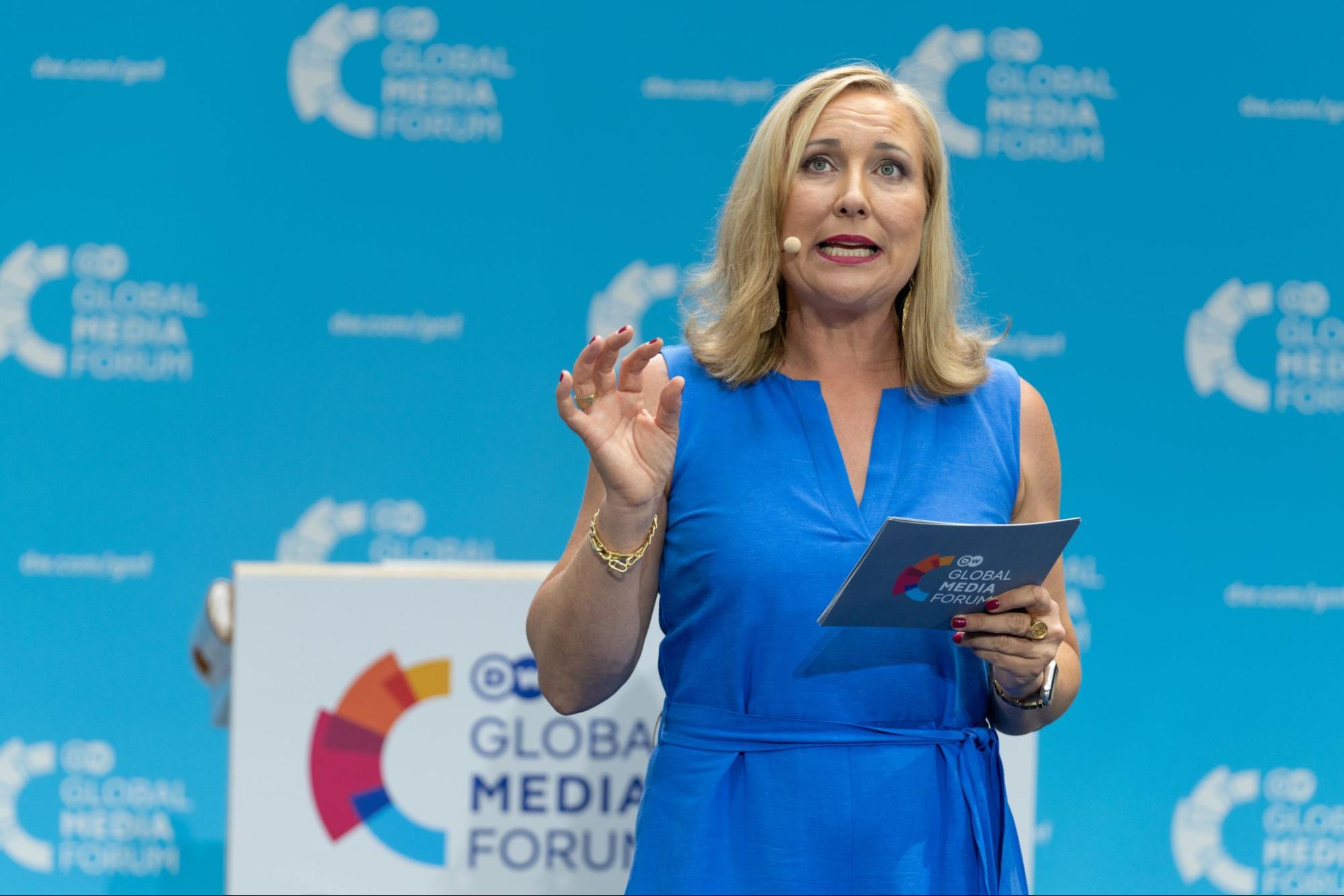
Dr. Courtney C. Radsch is a Georgetown AIDC Fellow and Director of the Center for Media & Digital Governance at the Open Markets Institute, where her research interrogates how the political economy of information ecosystems, AI governance, and market concentration are reshaping democracy, human rights, journalism, and the conditions for independent thought, work that has led to congressional and parliamentary testimony, a spot among the 100 Brilliant Women in AI Ethics, and publications ranging from Brookings to the Oxford University Press. As a recognized authority on the political economy of emerging sociotechnical challenges, she has a track record of influence and impact, regularly publishes and provides commentary and analysis in both specialist and mainstream media, and keynotes and moderates events around the world. Dr. Radsch has testified before congressional, parliamentary, and competition authorities and advises publishers, journalism leaders and international organizations around the world about how tech and AI impact journalism and information ecosystems. Her recent work on cognitive liberty argues that AI systems are dismantling the very communicative practices, the capacity to verify, deliberate, and arrive at positions free from manipulation, that democratic self-governance depends on, and explores what legal and institutional architectures can protect freedom of thought as a fundamental human right when AI systems and their corporate creators are accumulating the standing, and increasingly the rights, of humans. These questions and framings are rooted in her prior research developing an empirically grounded theory rooted in Islamic communications theory, the sociology of social movements, and the phenomenology of sociotechnical systems to explain how communities build authentic conditions for imagination and collective action under authoritarianism and in communication systems captured by corporate surveillance business models. She holds non-resident fellowships at the Brookings Institution and the Center for International Governance Innovation and serves on the boards of Tech Policy Press, the Global Forum for Media Development, ISOC-DC, and TheGuardian.org. She holds a PhD in international relations and is the author of Cyberactivism and Citizen Journalism in Egypt: Digital Dissidence and Political Change.